Why We Keep a Human in the Loop: Guardrails for Safer, Smarter AI
In today’s race to automate everything, it’s easy to get swept up in the excitement of AI doing it all (suggesting, approving, publishing) without human input. But at InventiveTechnology.ai (and especially in projects like KidsActivityHub.co.uk), we’ve learned the value of slowing things down just enough to ask: Should this be published?
And that question shouldn’t be answered by AI alone.
What is “human in the loop”?
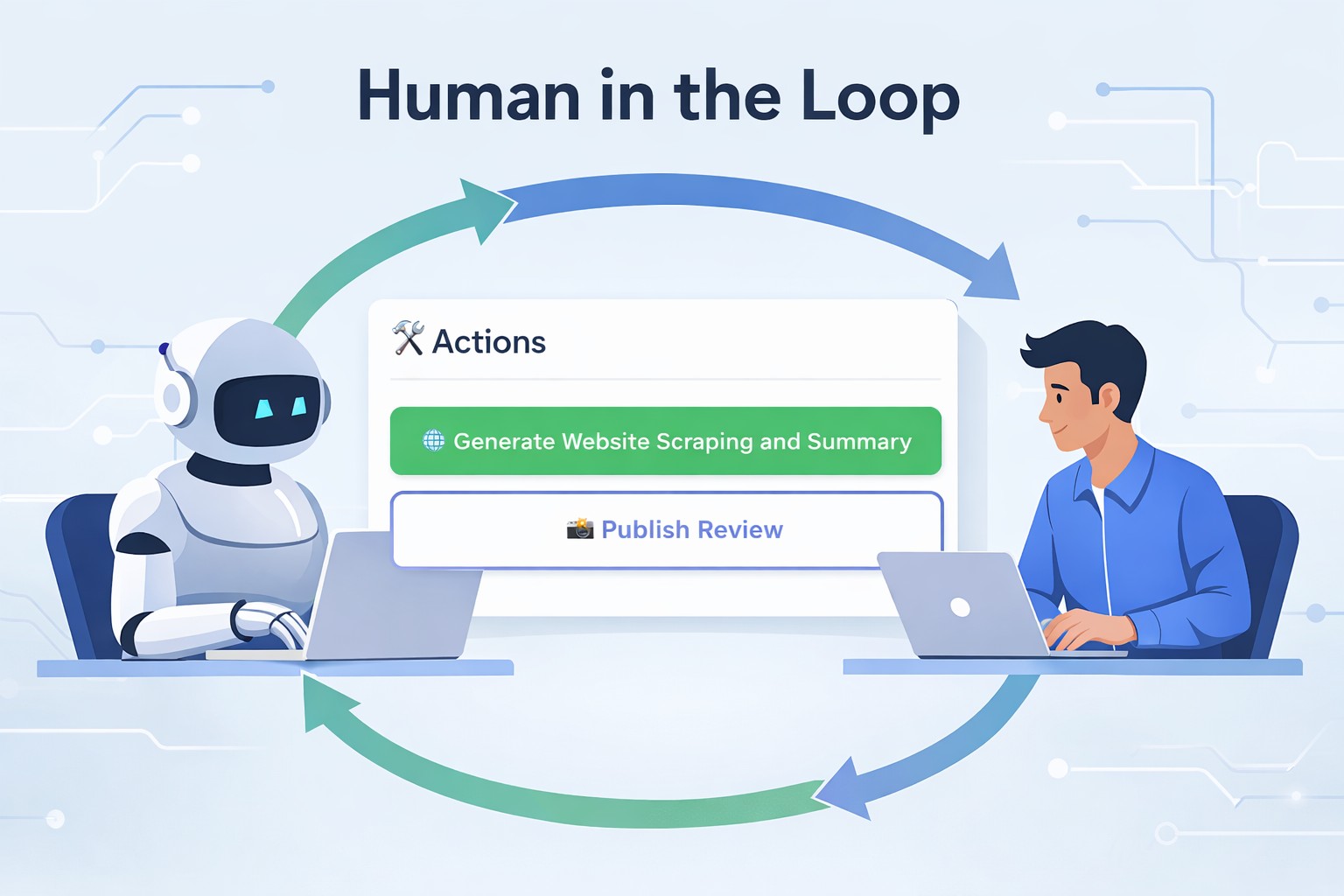
Human in the loop (HITL) means a real person plays a decision-making role in an otherwise automated process. AI can do the heavy lifting (analyzing, drafting, recommending), but the final judgment call belongs to a human.
Why this matters, especially with kids
With KidsActivityHub, a platform helping parents and caregivers discover local, age-appropriate activities, accuracy and tone are crucial. We’re talking about children’s wellbeing: not just content quality, but safety, inclusion, and clarity. A poorly phrased AI-generated activity description isn’t just embarrassing; it could be harmful.
That’s why we introduced a human review gate. No event listing, recommendation, or generated text goes live without being seen and approved by a real person. This step adds friction (the good kind). It ensures we catch subtle problems like:
- Ambiguous or unsafe activity descriptions
- Tone that’s too robotic or adult-centric
- Mismatched age ranges or locations
The real risk of “AI on autopilot”
AI is brilliant at pattern recognition, but it lacks context. It doesn’t know what it doesn’t know. If left unchecked, generative AI can invent facts, misinterpret nuance, or reinforce biases.
We’ve seen companies skip human oversight to save time, and suffer for it. Content goes out that’s irrelevant, offensive, or just plain wrong. Regaining user trust after that is far harder than pausing for a quick human glance up front.
Building ethical, useful systems
Our approach is simple:
- AI helps scale, speed, and suggest, acting as the engine.
- Humans ensure quality, care, and ethics, serving as the brakes.
Together, that creates products that feel intelligent without being careless.
What’s next?
We’re continuing to improve how our HITL systems work, using AI to flag edge cases for closer human review, track where intervention is most needed, and learn from every “pause” we take. It’s not about making AI slower; it’s about making it better.
Because when you’re building tools for families, communities, and real people, a little human judgment goes a long way.
Curious how we balance AI and human input in our products?
Contact us to learn more about our approach or explore collaboration opportunities.